Table Of Content

Still, despite the hundreds of designs and Tinseltown attention, Lautner didn’t achieve prominence with his peers or the architectural press until after his death in 1994. Googie architecture, once derided by critics as vulgar and superficial, is now considered a part of the American cultural zeitgeist. Several of Lautner’s houses in Los Angeles have been designated as historic cultural monuments. During the mid-20th century, Lautner built almost 200 houses and commercial buildings throughout Southern California. He was a major contributor to the commercial architecture genre known as Googie, the ultramodern roadside buildings of the ’50s and ’60s named for Lautner’s design for the Googie coffee shop on Sunset Boulevard. The time it’s taken Govan to add this first modern house to the LACMA collection suggests that we shouldn’t expect a flood of similar donations to follow.
Sheats–Goldstein Residence
The architect John Lautner — Frank Lloyd Wright disciple, iconoclast and reluctant Angeleno — produced a number of strikingly unorthodox, gravity-defying houses in the decades after World War II. For pure drama, few can match the 1963 Sheats-Goldstein house just above Beverly Hills. "I remember building projects in the sand in Miami Beach and everyone coming by and saying, 'You're going to be an architect someday,' " he says.
Elevating Your Space: The Rise Of Designer Bean Bags In Modern Interiors
The maintenance required for upkeep — along, of course, with the fact that paintings are portable and architecture is not — means that houses, however important, aren’t collected with anything like the zeal of modern and contemporary art. These days the house is something of a shrine to Goldstein’s travels, basketball fandom and minor celebrity. The living room is lined with photographs of him posing with NBA players, musicians, models and movie stars.
‘The Circle’ S06 debuts new apartments & a fresh filming location in Atlanta building
The Sheats–Goldstein Residence is a home designed and built between 1961 and 1963 by American architect John Lautner in the Beverly Crest neighborhood in Los Angeles, California, a short distance up the hill from the Beverly Hills city limit. Typical of Lautner's work, the project was approached from an idea and a structure was derived that addressed the challenges of the site. That’s a great phrase, because it suggests an order, a kind of orchestration — but, of course, no one is choreographing street life. It’s human society organizing itself along the sidewalks of the urban jungle, and Hamilton’s images find that invisible order inside the disorder. Sylvia Plachy, his fellow staff photographer at the Village Voice in the ’70s and ’80s, calls Hamilton a “classicist,” and he fully cops to being obsessed with composition, with lighting that echoes sources as stylized as the film noirs he grew up on.
Party-throwing squatters evicted from mansion near LeBron James’ Beverly Hills home
At the Voice, he shot stories like one in which he and the reporter Michael Daly embedded themselves for days in a Coney Island street gang called the Homicides (who lived up to their name). When it came to taking risks, there was nothing James Hamilton couldn’t, wouldn’t, or didn’t do. “I want it to be open to the public as much as possible so they can learn,” Goldstein said.
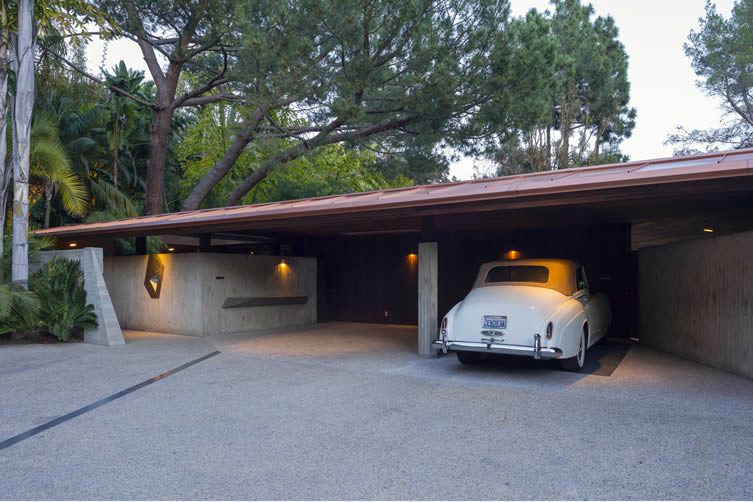
This House Is A Work Of Art, So The Owner Is Donating It To A Museum
Get more of Dallas’ top restaurant, real estate, society, fashion and art in your news feed. The 70-something has shoulder-length white hair and a penchant for wearing black-leather pants and a snakeskin hat. He has his own men’s fashion collection — and is perhaps most well known for being a devoted basketball fan, attending more than 100 NBA games each year. He watches basketball games every night from his Lautner-designed den on a 135-inch screen TV. Hollywood has always embraced Lautner’s striking, futuristic creations.
LACMA gets gravity-defying John Lautner-designed home featured in ‘The Big Lebowski’
Back in the day, he’s also said to have had an affair with American actress, singer, and Playboy Playmate Jayne Mansfield, who was married to someone else at the time. Still, he never married, and he has no children, which is why the decision to donate his unique home to LACMA came naturally. The house has also served as a setting for fashion ads and commercials, glamorous events, and, well, porn flicks.
They’re miracles of spontaneous classicism, as if he’d plucked a moment out of the air and made it timeless. His ability to construct composition around an existential situation is a form of artistic voodoo. His entertainment complex, like much of the work here, morphed from what he first envisioned. It started in the early ’90s when Goldstein bought Lautner’s 1960 Concannon House, just west of the Sheats-Goldstein house, with plans to build a tennis court and guesthouse on its lot. The Goldstein House's location in the heart of Beverly Hills is also a significant advantage for filmmakers, photographers, and event planners.
Inside the 'Big Lebowski' home, the iconic $40 million mansion that will be donated to an art museum
It’s located in L.A.’s Beverly Crest neighborhood and it’s a private property. Unfortunately, the Sheats-Goldstein house is a private property, so it’s not open to the public. The Sheats-Goldstein house is located in the Beverly Crest neighborhood of Los Angeles, California, just up the hill from the Beverly Hills city limit. Due to its location, the house offers amazing views of the city, but is also very secluded. For now, James Goldstein is living his best, most glamorous life up in his hillside mansion overlooking the City of Angels.
James Goldstein's 'Big Lebowski' House Gifted to LACMA Condé Nast Traveler - Condé Nast Traveler
James Goldstein's 'Big Lebowski' House Gifted to LACMA Condé Nast Traveler.
Posted: Thu, 18 Feb 2016 08:00:00 GMT [source]
Born in Michigan in 1911, Lautner was an apprentice for architect Frank Lloyd Wright at his legendary Arizona home and school, Taliesin West. During Lautner’s six-year tenure there, he helped Wright carry out a number of projects. Like Wright, Lautner was interested in the relationship between humans, space, and nature, and his buildings often integrated water and natural landscapes into the design. The landmark Chemosphere home in the Hollywood Hills and its owner, publisher Benedikt Taschen, were profiled in a 2005 Home cover story. “What was great about Lautner is that he had this dualism about nature and the city,” Taschen said at the time, noting that one side of the house was “pure nature,” with skunks, bobcats, coyotes and deer, while the other side was “pure city,” the vast San Fernando Valley.
Goldstein has agreed to let the museum organize limited tours and events while he is living in the house. In the longer term, LACMA envisions opening it for fundraisers, exhibitions and conferences, as well as collaborations with other museums. In a city with stellar modern residential architecture, and people monied enough to afford it, James Goldstein and architect John Lautner have created a house of wonders.
Carved into the sandstone ledge of a hillside, its most striking feature was the expansive living room, which was completely open to the terrace outside, and protected from the cold only by a curtain of forced heated air. There is no air conditioning; the house is entirely cooled by cross-ventilated windows. Retractable skylights in the kitchen, an open dining area for meals under the stars, and a glass terrace were all unusual features for the time and helped reinforce the house’s indoor-outdoor feel. They replaced the original windows, which were separated with steel mullions, with giant sheets of interrupted glass. Ignoring Lautner’s recommendation of a spare landscape dotted with pine trees, Goldstein planted a lush tropical garden, which over the years has nearly enveloped the house. He asked the architect to design built-in concrete furniture for the living room.
“Our team is very selective about what events we bring to life at the house. Every event Talent Resources Sports is responsible for is curated and specific to the DNA of the brand partner and their marketing and hospitality objectives. We amplify our event-driven efforts via social media through our network of athletes and celebrities,” explains Spencer. Another one-of-a-kind feature of the bedroom is the closet which features a turnstile to allow Goldstein to easily view his wardrobe. Spencer and his business partner Michael Heller currently consult officially with the iconic home, managing the space for high-end brand activations, organizing exclusive events and photoshoots. We know he grew up in Milwaukee and then moved to California to attend Stanford University, after which he got into real estate and started investing heavily in developing Century City in L.A.
High Above Beverly Hills, LACMA Fetes the Goldstein House (Published 2016) - The New York Times
High Above Beverly Hills, LACMA Fetes the Goldstein House (Published .
Posted: Thu, 24 Mar 2016 07:00:00 GMT [source]
Working around the existing architecture was often more difficult than building something from scratch, Goldstein adds — renovations for the master bedroom alone took four years to complete. “From that project on, I never stopped,” Goldstein says of working on the house with Lautner. The duo continued to collaborate until the architect’s death 22 years later. The Sheats-Goldstein house, located a short distance from Beverly Hills, was originally built in 1963 for Paul Sheats, a university professor, and his wife Helen Sheats, an artist.
In the living room—which has become known as the "Big Lebowski Room"—boasts a curvy concrete-and-leather sofa that resulted from a collaboration between Goldstein and Lautner. The ceiling is covered with sandblasted concrete that still has the original miniature circular skylights. When we sat down with Goldstein, he explained that Lautner never outwardly offered his vision of the house. "He wanted to know my vision and never suggested any specific improvements. He would wait for me to say what I wanted to improve on, and then would suggest ways of implementing those ideas," he explains.


No comments:
Post a Comment